
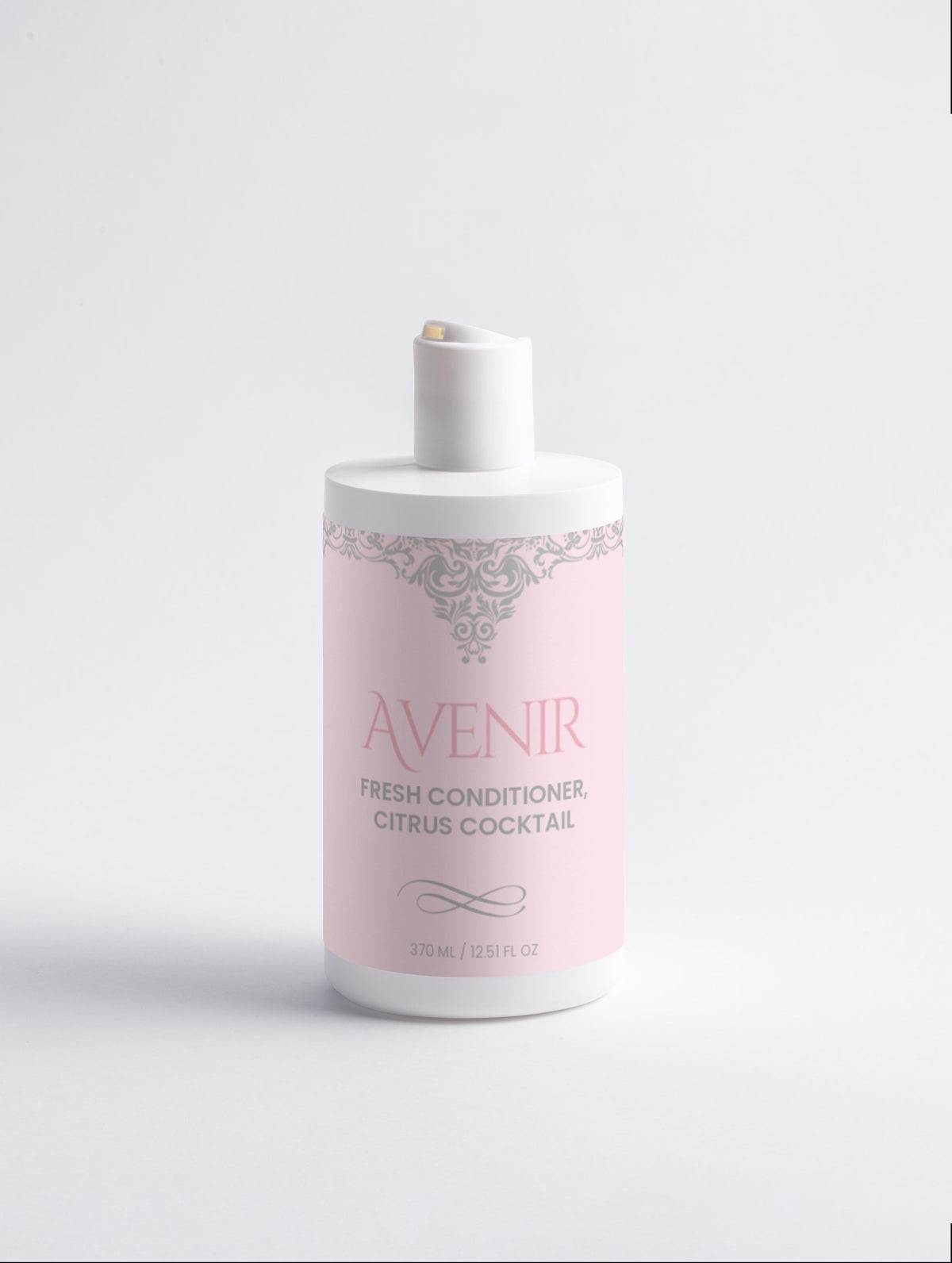
Hair that feels clean but immediately knots, catches or becomes difficult to comb can turn a simple wash into a frustrating routine. Tangling is often about friction, product placement and handling rather than a need for more aggressive brushing.
Why freshly washed hair can tangle
Wet hair clumps together, and shampooing can remove some of the surface oils that helped strands slide past one another before washing. Long, fine, curly, coloured or heat-styled hair may show this more strongly.
Do not scrub the lengths
Concentrate shampoo at the scalp. Let lather and rinse water travel through the lengths instead of piling all the hair on top of the head and rubbing it together.
Add slip where it is needed
Apply AVENIR Fresh Conditioner – Citrus Cocktail through the mid-lengths and ends. The current listing highlights betaine, panthenol and wheat protein and positions the formula to nourish hair, ease styling and care for dry ends.
Detangle from the ends upward
Use fingers or a suitable wide-tooth comb and begin at the ends. Work upward gradually rather than dragging from the roots through every knot at once.
Reduce towel friction
Press or squeeze away excess water rather than rubbing hair vigorously with a towel. Rough towel movement can encourage strands to wrap around each other.
Frequently asked questions
Does tangled hair always mean damage?
No. Texture, length, product buildup and technique can all contribute, although weathered ends may tangle more easily.
Should I brush wet hair?
Use a method and tool suited to your hair type. If detangling wet, work gently with plenty of slip and avoid force.
The takeaway
A calmer wash technique, targeted conditioner and gentler detangling can make a noticeable difference to how manageable hair feels after washing.

Leave a comment
This site is protected by hCaptcha and the hCaptcha Privacy Policy and Terms of Service apply.